

Underground stormwater systems are often discussed in terms of storage capacity and land savings. But their true value becomes clearer when applied to real-world site constraints.
In many urban and high-density developments, stormwater infrastructure directly competes with usable land. Underground systems help project teams manage water without sacrificing buildable space, parking, or community amenities.
Here are some of the environments where underground stormwater systems can make the biggest impact.
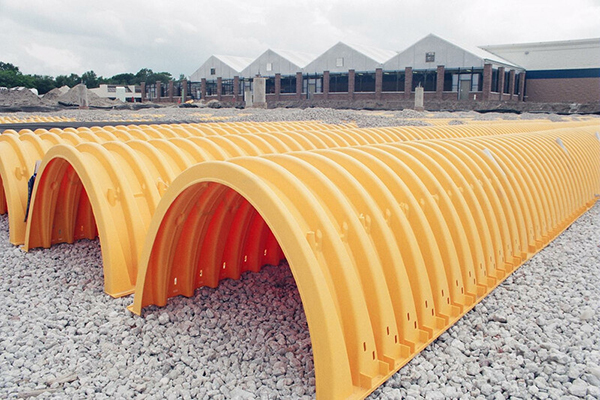
1. Tight Urban Infill Developments
Urban infill sites often come with limited footprints, existing infrastructure, and strict development constraints.
Traditional detention ponds can consume valuable land that would otherwise support:
- Buildings
- Parking
- Public space
- Access roads
Underground systems allow stormwater storage to be integrated beneath usable surfaces, helping teams maximize site potential in dense urban environments.
2. Commercial and Retail Developments
For commercial developments, every square foot can influence revenue generation and customer accessibility.
Underground systems are commonly used beneath:
- Parking lots
- Drive aisles
- Landscaped areas
This allows projects to maintain operational space while still meeting stormwater management requirements.
3. Parks, Plazas, and Community Spaces
Surface ponds can limit how public spaces are designed and used. 
By moving infrastructure underground, municipalities can preserve:
- Green space
- Recreational areas
- Walkability
- Site aesthetics
This approach helps communities maintain functional gathering spaces without compromising stormwater performance.
4. Redevelopment and Retrofit Projects
Redevelopment projects rarely offer the flexibility of a blank site.
Underground systems can help teams work around:
- Existing utilities
- Buildings
- Property boundaries
- Limited expansion opportunities
Their modular nature makes them especially useful in retrofit and phased construction environments.
5. Sites Prioritizing Long-Term Land Value 
This is especially important in areas where land costs are high and development density continues to increase.
Underground systems help preserve surface land for higher-value uses rather than dedicating large portions of a site to visible stormwater infrastructure.
Over time, this can improve:
- Site efficiency
- Project economics
- Flexibility in future development
Final Thoughts
If you’re interested in the broader advantages of underground stormwater infrastructure, you might also like our related article, “How Underground Stormwater Systems Help Cities Maximize Land Use.”
Not every project requires underground stormwater infrastructure—but in space-constrained environments, the benefits can be substantial.
Evaluating these systems early in the planning process can help teams improve land utilization while maintaining long-term stormwater performance.
Want a deeper look at system selection and design considerations?
Download Titan’s guide to maximizing land use with underground stormwater systemshere.