

Agriculture depends on water, but too much of it in the wrong place can derail productivity, damage soil structure, and threaten long‑term land viability. As climate patterns shift and extreme rainfall events become more common across North America, farms are facing mounting stormwater challenges that traditional drainage methods can’t always keep up with.
Engineered geosynthetic solutions are stepping in to fill that gap, helping producers protect their fields.
The Stormwater Problem on Today’s Farms
- Intensifying Rainfall and Runoff
Heavier, more frequent storms overwhelm conventional drainage systems. When water can’t infiltrate quickly enough, it pools on the surface, delaying planting, restricting equipment access, and reducing yields.
- Soil Erosion and Sediment Loss

Uncontrolled runoff strips away topsoil, the most valuable layer for crop growth. Once lost, it takes decades to rebuild. Erosion also carries sediment into waterways, affecting downstream ecosystems and triggering regulatory concerns.
- Compaction and Poor Field Trafficability
Saturated soils are prone to rutting and compaction, which reduce infiltration even further. This creates a cycle where fields stay wetter for longer and become harder to manage.
- Nutrient Leaching and Water Quality Impacts
Stormwater can transport fertilizers, pesticides, and organic matter off fields, reducing nutrient efficiency and contributing to water quality issues in nearby streams and lakes.
- Infrastructure Stress
Farm roads and ditches take a beating during storm events. Without reinforcement, they degrade quickly. Thus leading to costly repairs and operational downtime.
How Engineered Solutions Help Agriculture Manage Stormwater
Geosynthetics offer a suite of proven, cost‑effective tools that help farmers control water, stabilize soils, and protect their land. Titan’s engineered solutions are designed to work with natural systems, not against them.
Download Titan’s guide on underground stormwater systems here to learn more.
Erosion Control on Slopes, Ditches, and Waterways
Heavy rainfall and concentrated flow can strip away valuable topsoil. Erosion control blankets (ECBs) and turf reinforcement mats (TRMs) provide immediate surface protection while supporting long‑term vegetation growth. They stabilize slopes, protect newly seeded areas, and reinforce farm ditches and waterways. 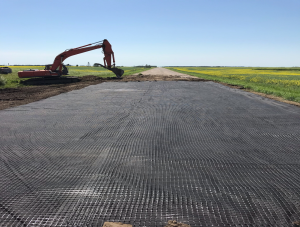
Road and Yard Stabilization with Geogrids
Farm roads and equipment yards often become soft, rutted, or impassable after rain. Geogrids strengthen the base layer by distributing loads more evenly, improving bearing capacity and reducing the amount of aggregate required. The result is a more resilient surface that stands up to heavy equipment and reduces ongoing maintenance.
Stormwater Storage and Controlled Release
Operations managing large volumes of runoff can benefit from underground stormwater chambers and modular storage systems. These systems create space for water to capture, store, infiltrate, or release stormwater slowly. These systems help reduce peak flows, protect downstream waterways, and support reuse strategies such as irrigation. They’re particularly effective for livestock operations, greenhouses, and large farmyards with significant impermeable surfaces.
Building More Resilient Farms with Engineered Solutions
Stormwater challenges aren’t going away, but the tools to manage them are stronger than ever.
At Titan, we work with engineers and contractors to design systems that fit the unique needs of agricultural operations across North America. Whether you’re dealing with saturated fields, eroding ditches, or infrastructure that can’t keep up with the weather, engineered solutions can help you stay ahead of the storm.
Contact us today to learn more.