
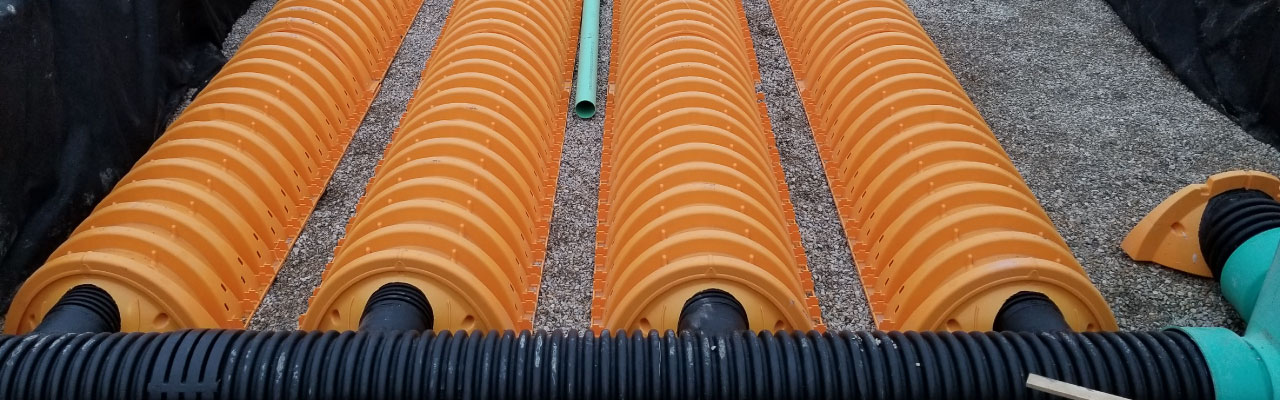
Stormwater Management
Stormwater Management addresses the impact of stormwater runoff on urban and rural development. It is an important consideration for projects where there are needs related to water detention and infiltration, flood mitigation, and rainwater drainage.
With increased urbanization, underground stormwater systems are highly effective at managing stormwater runoff. These systems are designed to capture and store stormwater underground, allowing it to slowly filter into the ground over time.
This helps to reduce the amount of stormwater runoff that enters streams, rivers, and other bodies of water, which can help to reduce flooding and erosion. In addition, underground systems can be designed to filter out pollutants and other contaminants, which can help to improve water quality.
These underground stormwater management systems are installed below ground under parking lots, roads, playgrounds, and other facilities that require water distribution and infiltration solutions along with the proficiency to control peak flow rate and water quality control.
Compared to conventional stormwater management systems, like above-ground retention ponds and swales, underground stormwater management systems allow for more efficient use of space which is beneficial in urban areas where land is at a premium.
They also offer sustainability benefits by reducing the amount of stormwater runoff that enters streams, rivers, and other bodies of water.
By capturing and storing the water, underground systems help to promote groundwater recharge and reduce the risk of water shortages during periods of drought, protecting water resources.
Product Brochure
Environmental Impact Guide
More Information
Ask the Expert – FAQ
Case Studies
Titan Geochat Video
Sustainability Spotlight Video: Green Infrastructure and Stormwater Management
Articles
Specifying Stormwater Solutions
Best Practices for Stormwater System Design
Stormwater Management Solutions
Stormwater management is site-specific, and no single solution can be recommended. Detail and precision are imperative to the planning, designing, and construction phases. Titan offers various underground stormwater management solutions with design consultation, so your site and investment are protected.
System
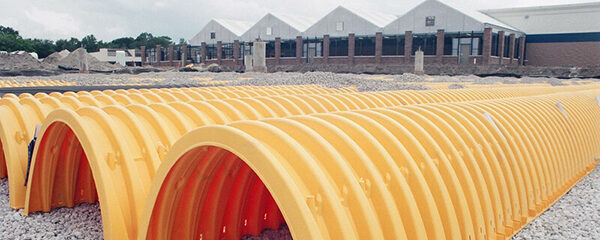
StormTech® Arch Chambers
StormTech® underground chambers are available in various sizes making it suitable for major commercial construction site drainage requirements.
System
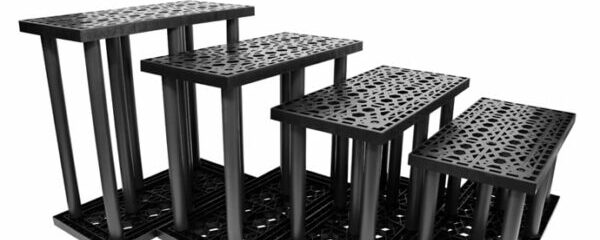
StormTank® Modules
StormTank is a subsurface stormwater storage unit used to regulate stormwater flow and provide large-volume storage.
System
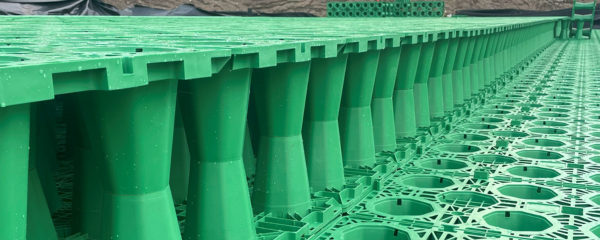
Accessories
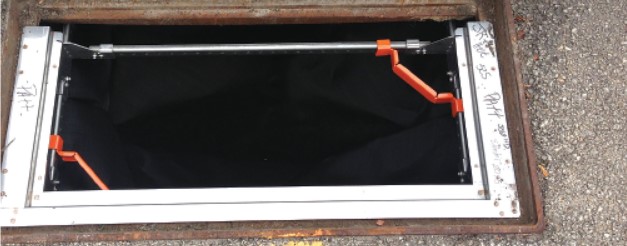
FlexStorm Pure™ Inlet Filter
FlexStorm Pure™ is designed for long-term inlet protection and stormwater runoff management.
Accessories
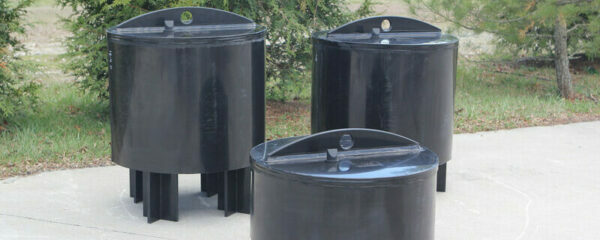
BayFilter™ Purification Filter
BayFilter™ is the highest-quality stormwater purification filter currently available.


Product Brochure
Stormwater Management FAQs
What types of Stormwater Management systems do you recommend and how do they differ?
open bottom chambers with little empty space, whereas the modular tank system consists of stackable blocks with significant void space.
What are the pros and cons of the arch chamber and modular tank systems?
What are the benefits of the arch chamber and the modular tank underground systems?
There are many benefits to both the arch chamber and the modular tank system of both systems, which include:
- Flood Reduction: An underground stormwater system can help to reduce the risk of flooding by capturing and storing stormwater runoff during heavy rain events. By slowly releasing the water over time, the system can help to prevent flooding in downstream areas.
- Improved water quality: An underground stormwater system can help to improve water quality by filtering out pollutants and other contaminants from stormwater runoff. The system can be designed to include debris rows and isolator rows for ease of maintenance and higher sediment retention.
- Space Saving: Both systems are designed to be installed below ground, so they can be installed under parking lots, parks and other areas, which allows for more efficient use of space. This can be especially beneficial in urban areas where land is at a premium. In contrast, traditional stormwater management methods such as retention ponds or swales usually take up significant amounts of land area.
- Enhanced property value: An underground stormwater system can be an attractive feature that enhances the value of a property. The system can be designed to include landscaping features, such as bioswales with grasses and flowers for pollinator habitats. The system can also be equipped for rainwater harvesting to provide irrigation on site.
- Easy maintenance: An underground stormwater system requires less maintenance than traditional stormwater management systems. Once the system is installed, it requires very little maintenance beyond occasional inspections to ensure that it is functioning properly.
- Sustainability: An underground stormwater system promotes sustainability by reducing the amount of stormwater runoff that enters streams, rivers, and other bodies of water. By capturing and storing the water, the system can help to promote groundwater recharge and reduce the risk of water shortages during periods of drought.
How do you address potential underground stormwater system maintenance and repair needs?
Underground stormwater systems require less maintenance and repair than conventional stormwater management systems such as retention ponds and swales.
Here are some methods for dealing with maintenance:
- Conduct regular inspections: Regular inspections of the underground stormwater system can help to determine the appropriate removal frequency.
- Clean out sediment and debris: Over time, sediment and debris can accumulate in the underground stormwater system, which can reduce its effectiveness. Cleaning out sediment and debris on a regular basis can help to ensure that the system continues to function properly and the storage volume is optimized.
What are some important considerations in selecting which underground stormwater management system to use?
When choosing a system, load rating, buoyancy, lateral load and potential dead loads are important factors. These parameters ensure the stormwater system has been designed to match the site requirements for long term performance.