
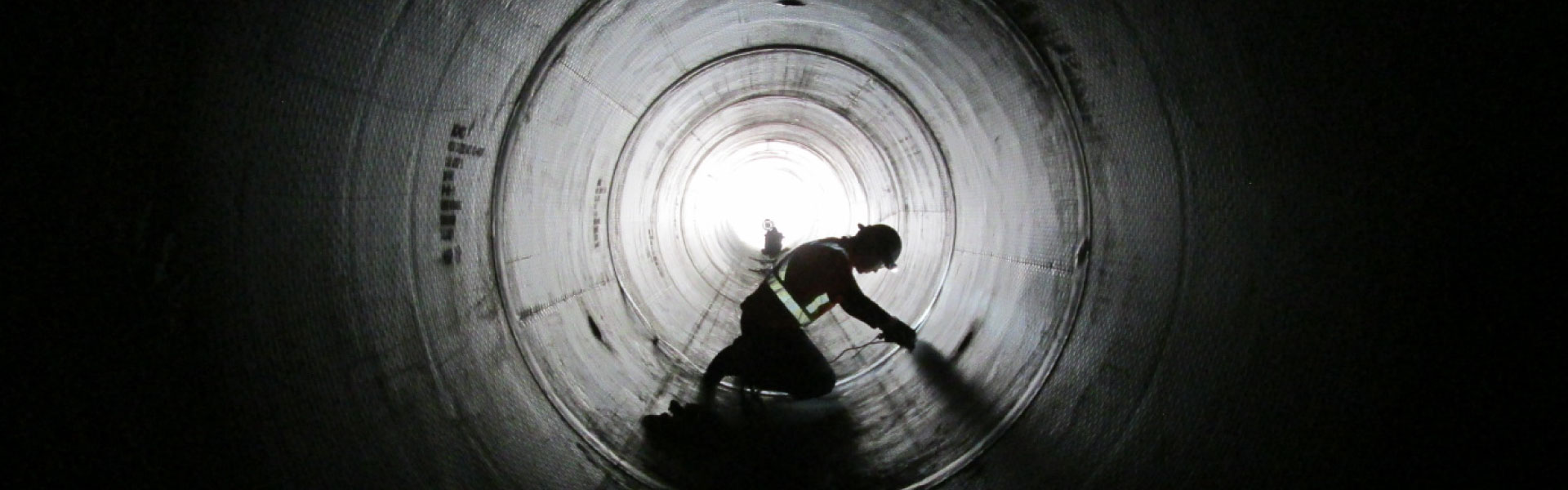
Concrete Protection
Concrete Protection is essential to prevent concrete infrastructure from corrosion and disintegration over time. Titan’s Concrete Protection Liner (CPL) made of high-density polyethylene (HDPE), provides superior protection compared to other technologies.
Unlike spray coatings which typically require extensive upkeep, CPL features anchors that embed directly into the concrete. This ensures a durable, long-lasting barrier that safeguards against concrete corrosion or concrete degradation stemming from microbial-induced corrosion (MIC), and infiltration and inflow (I&I).
As a bonus using CPL for concrete protection eliminates ongoing maintenance costs and helps to maintain structural integrity.
The performance life of Concrete Protection Liner matches that of the concrete structure, or surface in which it is installed. In the event of a primary gasket failure or a crack in the concrete, CPL provides secondary containment, assuring the media does not leak into the environment.
Concrete Protection Liner is utilized across various sectors to enhance infrastructure durability and performance. These sectors include; municipal wastewater infrastructure, potable water infrastructure, utilities infrastructure, petroleum and chemical manufacturing, corrosive mining infrastructure applications, and agriculture liquid storage infrastructure.
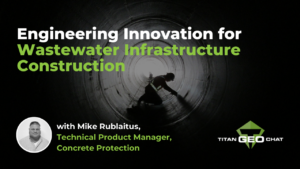
Applications for Concrete Protection Liner (CPL):
- Precast Concrete Wastewater Pipe
- Potable Concrete Water Mains and Feeder Mains
- Concrete Liquid Storage Tanks
- Wastewater Manhole Rehabilitation
- Concrete Chambers
- Concrete Utility Tunnels
- Concrete Lift Stations
- Concrete Wet Wells
- Concrete Structures in Wastewater Treatment Plants
- C302 Pressure Concrete Pipe
- Concrete Containment Structures for Industrial Wastewater
- Municipal and Agricultural Concrete Digesters
- Public Utilities Reinforced Concrete Pipe
Benefits of Concrete Protection Liner:
- Superior Chemical Resistance: Concrete Protection Liner (CPL) offers superior protection against a wide range of chemicals.
- Exceptional Backpressure Resistance: Concrete Protection Liner (CPL) provides the highest resistance against backpressure as compared to other technologies. This means CPL lined pipe and structures can go deep in groundwater while still providing corrosion resistance and protection against inflow and infiltration.
- Abrasion Resistance: Concrete Protection Liner (CPL), made of HDPE, provides excellent abrasion resistance. They have a higher abrasion resistance than PVC, fiberglass, or concrete.
- UV Degradation Resistance: CPL can be made with antioxidants that provide excellent resistance to UV degradation from sunlight for outdoor applications.
- Custom Prefabrication: CPL can be prefabricated at our manufacturing facility for applications such as pipe, manhole riser sections, sumps, utility boxes, lift stations, wet wells, chambers, and structures.
- Versatile Welding Options: CPL can be welded in a variety of ways including be butt fusion welded, extrusion welding, or electrofusion welding for versatile application.
Concrete Protection Liner vs. Spray Applied Coating for Concrete Protection
Concrete Protection Liner (CPL) differs from spray-applied coatings in several ways making it a higher-performing option for concrete protection.
| Concrete Protection Liner (CPL) | Spray-Applied Coating | |
|---|---|---|
| Bonding | Embeds directly into the concrete, creating a mechanical bond. | Relies on a surface bond with no structural embedment. |
| Application Process | Applied to forms before concrete is poured, ensuring consolidation around anchors. | Requires surface preparation and can incur additional costs. |
| Moisture and Humidity Sensitivity | Not affected by relative humidity or moisture content in the concrete. | Often has strict requirements for humidity and moisture content, which can void warranties. |
| Backpressure Resistance | Tested to both ASTM and Dibt backpressure standards. | Often fails under groundwater back pressure; rated based on pull-out strength. |
| Maintenance and Longevity | No need for reapplication; design life matches the structure. | Requires periodic reapplication, which increases long-term costs. |
| Elongation and Expansion | High elongation and expansion properties, between 300% to 500%. | Low elongation, typically around 4% to 6%. |
Concrete Protection New Construction Solutions
Concrete protection is project-specific. Titan offers versatile concrete protection liner solutions for various projects, including design consultation services, aimed at ensuring your infrastructure and investment are fully protected.

Cast-In-Place Solution
Cast In Place refers to lining the smooth side of the Concrete Protection Liner against the forms before pouring concrete

Precast CPL Solution
Precast Concrete Protection Liner (CPL) involves offsite casting of concrete structures like manholes and wastewater pipes with an embedded CPL.
Rehabilitation Solutions
Concrete rehabilitation solutions restore and strengthen concrete structures, extending their service life and improving safety and performance.

Concrete Rehabilitation Solution
Concrete Protection Liner is an effective rehabilitation solution used for damaged concrete structures and surfaces, such as liquid storage tanks.
Concrete Protection FAQs
When it comes to wastewater infrastructure, what is the best way to protect concrete pipe, chambers, lift stations, and digester tanks prone to corrosion?
An HDPE Concrete Protection Liner offers chemical resistance to standard wastewater streams, providing dual protection by safeguarding against Microbial-Induced Corrosion (MIC) caused by hydrogen sulfide and acid-producing bacteria, as well as preventing inflow and infiltration. Notably, it is the sole technology capable of delivering secondary containment in piping systems. Even if the primary gasket fails or the concrete experiences cracks, the system remains safeguarded against infiltration and inflow.
How does embedded concrete protection liner (CPL) differ from spray-applied coating?
Spray coatings only bond to the surface of the concrete, they do not embed into it. This makes them vulnerable to failure in the presence of backpressure. If a liner is going to fail, it is most likely to fail from back pressure, not something scraping the liner off the surface. Most spray coatings also require a fair amount of surface prep work, even on fresh concrete.
Depending on the type of coating, sandblasting or hydro blasting on the existing surface is required per the manufacturer’s guidelines to properly prepare the surface for the spray liner to adhere to it. When applied, spray coatings have varied consistency and thickness. Samples can be taken to spot-check the thickness, but there is no way to check the coating’s thickness across the entire surface.
HDPE and Polypropylene concrete protection liners have anchors on one side. The concrete cures around those anchors, making them a structural part of the concrete.
They can withstand back pressure up to 2 bar using the ASTM or German SKZ test methods for back pressure. In addition, all HDPE and Polypropylene liners are made in a controlled factory environment where the thickness, chemical, and physical properties are certified before leaving the manufacturing plant.
Can embedded CPL be used to rehabilitate corroded manholes without trenching or digging?
Yes, the Titan Manhole Rehabilitation System incorporates embedded CPL technology and offers an innovative trenchless solution for the rehabilitation of corroded manholes and wet wells. There is no digging up of the manhole or structure and all work is completed underground without disruption to pavement, wetlands, or other
surroundings.
What makes CPL a superior material option for wastewater applications?
Yes, the Concrete Protection Liner (CPL) is specifically designed for wastewater management applications. Several features of CPL make it well-suited for this sector:
Chemical Resistance: CPL is constructed from high-density polyethylene (HDPE) and polypropylene, providing it with a high degree of chemical resistance. In wastewater management, where exposure to various corrosive substances is common, this resistance is crucial to ensure the liner’s durability and longevity.
Resilience: CPL exhibits high pull-out strength, making it capable of withstanding the mechanical stresses and pressures associated with wastewater systems. This strength is essential for maintaining the integrity of the liner in challenging operational conditions.
Back Pressure: because it embeds into concrete and becomes part of the structure, it can handle in excess of two-bar of back pressure when installed into the water table.
Customization: CPL can be custom prefabricated to specific dimensions for pipes, wet wells, chambers, and poured-in-place structures. This flexibility allows for tailored solutions to fit the unique requirements of waste and wastewater management infrastructure, ensuring an optimal fit and performance.
Abrasion: HDPE and poly provide excellent wear and abrasion resistance, superior to other lining methods.