

Choosing the right geotextile isn’t just a box to tick. It can have a significant impact on how your project performs over time. Woven and nonwoven geotextiles may look similar on paper, but they behave very differently in the field. Understanding these materials will help you design smarter and build better.
Woven Geotextiles
Woven geotextiles are designed to provide strength and durability in soil separation and reinforcement. The structure of geotextiles allows water and gases to pass through but blocks soil particles. Manufactured by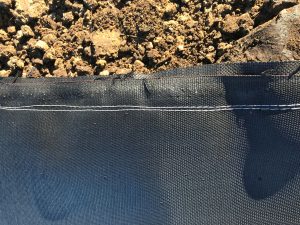 weaving polypropylene fibers together in a crisscross pattern, the fibers form a stiff fabric with high tensile strength—the tight weave results in low permeability. Therefore, non-woven geotextiles are not ideal for applications with heavy drainage requirements. However, their strength makes them perfect for long-term structural support.
Common Applications:
- Road and highway construction
- Driveway and parking lot stabilization
- Embankment and slope reinforcement
- Projects requiring soil separation with added strength
Nonwoven Geotextiles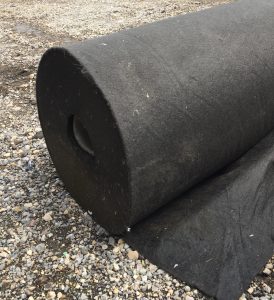
Nonwoven geotextiles are used for filtration, separation, and erosion control. They are made from 100% polypropylene staple fibers. These fibers are needle-punched into a random, stable network. Similar to woven geotextiles, nonwoven geotextiles allow water and gases to pass through, but not soil particles.
However, nonwoven geotextiles are notably more flexible with elongation rates exceeding 50%. Additionally, the material resists UV damage, rot, and chemical or biological breakdown. Non-woven geotextiles perform well in drainage-heavy and environmentally demanding applications.
Common applications:
- French drains and landscape drainage
- Retaining wall backfill
- Concrete overlays where the base is already stable
- Pedestrian pathways and low-load areas
Comparing Woven and Nonwoven Geotextiles
Both woven and nonwoven geotextiles work to aid soil separation while being easy to install and cost-effective. However, their structure makes them suitable for different applications.
Woven geotextiles are strong and used in projects calling for reinforcement and stabilization. The tightly woven structure offers high tensile strength. Thus, woven geotextiles are ideal for load-bearing projects and those needing long-term durability.
On the other hand, nonwoven geotextiles offer better filtration and drainage. The porous design allows water to flow more freely. Nonwoven geotextiles are well-suited for projects that require flexibility and permeability.
Ultimately, the choice between woven and nonwoven geotextiles depends on your project’s specific needs—whether it’s structural support or efficient drainage. Understanding these differences ensures you select the right material, leading to better performance and longer-lasting results.
Let’s Work Together
Titan’s technical team is here to help you navigate design considerations with precision. Whether you’re weighing geogrids vs. geotextiles or need site-specific recommendations, we’ll work with you to ensure optimal performance and value.
Contact us today for expert support, product guidance, and engineering insights that help you build smarter from the ground up.