

Wastewater infrastructure is built to serve communities for decades, but corrosion often has other plans. Hydrogen sulfide, microbial-induced corrosion (MIC), infiltration, abrasion… these forces work around the clock, slowly degrading concrete and shortening the lifespan of critical assets.
At Titan, we believe infrastructure should be built to last. That’s why more engineers and municipalities are turning to Concrete Protection Liner (CPL) as a long-term solution for protecting concrete in the harshest wastewater environments.
Corrosion Isn’t a Maintenance Issue. It’s a Design Challenge.
Traditional approaches often treat corrosion as something to “manage” over time. But coatings, patching, and periodic reapplications only delay the inevitable. Once corrosion takes hold, the cycle becomes costly and disruptive: 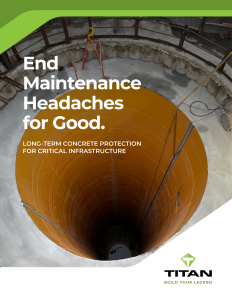
- System shutdowns
- Cleaning and sanitization
- Surface preparation
- Recoating
- Repeat
This reactive model drains budgets and shortens the lifespan of the structure itself.
To learn more about alternative solutions, check out our guide End Maintenance Headaches for Good.
Why Spray Coatings Fall Short
Spray-applied coatings often look like a cost‑effective choice at the start. However, their limitations become clear once they’re exposed to real wastewater conditions. They struggle to withstand backpressure, and even minor imperfections in surface preparation can compromise adhesion. Over time, chemical attack and constant exposure to corrosive gases accelerate degradation. As a result, coatings frequently need to be reapplied.
Each reapplication creates a recurring maintenance cycle that becomes increasingly expensive over the life of the structure. CPL breaks this cycle entirely by offering a permanent, built-in barrier that doesn’t rely on repeated applications to perform.
A Permanent Barrier Built Into the Structure 
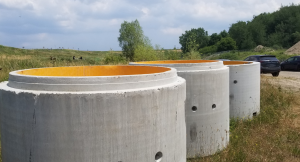
Unlike spray-applied coatings that sit on the surface, CPL becomes part of the concrete. Manufactured from high-density polyethylene (HDPE), CPL features integrated anchors that embed into the concrete as it cures. The result is a durable, mechanical bond that creates a continuous, corrosion-proof barrier.
Benefits of CPL:
- Protection against microbial-induced corrosion and hydrogen sulfide attack
- The liner prevents groundwater intrusion and protects system performance.
- Properly designed CPL systems can last as long as the concrete structure — often 50+ years.
- Reduced lifecycle costs
Designing CPL for Success
As with any engineered system, CPL performs best when it’s designed with the full wastewater environment in mind. Backpressure resistance is one of the most important considerations, ensuring the liner remains securely anchored and able to withstand the forces acting against it over time.
Chemical compatibility also plays a critical role, since wastewater conditions vary from system to system and the liner must be matched to the specific environment it will face. Flow characteristics should be evaluated early in the design process to maintain hydraulic efficiency and prevent turbulence or wear in high‑velocity zones. Abrasion resistance is equally important, particularly in areas where grit, solids, or high‑flow conditions can accelerate wear.
When these factors are addressed upfront, CPL becomes a reliable long‑term protection strategy for concrete infrastructure.
Build for Longevity, Not Reapplication
Wastewater infrastructure is too important and too costly to rely on short-term fixes. CPL offers a way to build structures that stay strong, stable, and corrosion-free for decades.
If you’re exploring corrosion protection options for lined pipe, manholes, or chambers, contact our team today to learn more.